
The Complete Thailand Visa Guide for 2026
Key takeaways
- Thailand has more visa pathways in 2026 than ever,
- The right visa depends on three questions: how long you’re staying, whether you need to work, and whether tax matters to you.
- Most people pick the wrong one by optimising for a single variable, price, length, or work rights, instead of fit.
- The cheapest option often isn’t enough. The most expensive often isn’t worth it.
- If you’re not sure where you land, that’s the conversation a relocation advisor exists to have.
Table of Contents
ToggleThailand's Visa Landscape in 2026
Thailand’s visa system has changed more in the past two years than in the previous decade. The introduction of the DTV in 2024 and the expansion of the LTR programme have given expats, remote workers, and retirees more pathways but also more room for confusion.
People choose a visa based on a single feature (length, cost, or work rights) without looking at how it fits their overall situation. This guide covers the major categories side by side so you can compare clearly.
Visa Exemption and Tourist Visa
Who it’s for: Short-term visitors, holidaymakers, and people testing the waters before committing to a longer stay.
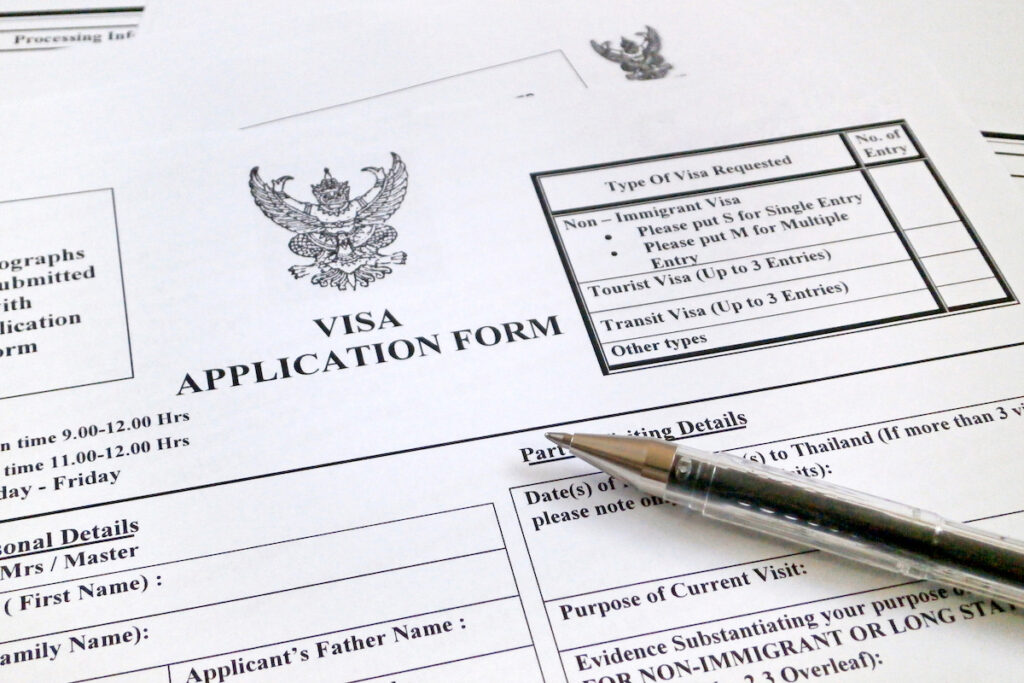
How it works: Citizens of most Western countries receive a 60-day visa exemption on arrival no application needed. This can typically be extended by 30 days at a local Immigration office for 1,900 THB. If you need more time upfront, a Tourist Visa (TR) can be obtained from a Thai embassy before arrival and grants a 60-day stay, also extendable.
Key limitation: No work rights of any kind. If you overstay, penalties are strict and can include blacklisting.
Best for: Holidays, short visits, scouting trips before relocating.
Destination Thailand Visa (DTV)
Who it’s for: Remote workers, freelancers, digital nomads, and anyone who wants flexible long-term access without high income requirements.
How it works: The DTV is a five-year multiple-entry visa. Each entry permits a stay of up to 180 days, extendable by another 180 days. The government fee is approximately 10,000 THB. Applicants need to demonstrate remote employment, freelance work, or participation in qualifying activities such as Muay Thai training, culinary courses, or medical treatment.
Key limitation: Work rights are limited to remote work for foreign employers or clients. You cannot be employed by a Thai company on a DTV. Standard 90-day reporting still applies.
Best for: Location-independent professionals, long-stay visitors who want flexibility without heavy financial thresholds.
Non-Immigrant B (Business and Work)
Who it’s for: Anyone employed by a Thai company or operating a business in Thailand.
How it works: The Non-Immigrant B visa is the standard route for legal employment. It requires employer sponsorship and is paired with a separate Work Permit, which authorises specific job functions for a specific employer. Renewals are typically annual and tied to the continued employment relationship.
Key limitation: The visa and work permit are linked to your employer. Change jobs and you restart the process. Thai companies must also meet the 4:1 Thai-to-foreigner hiring ratio and minimum capitalisation requirements to sponsor foreign workers.
Best for: Employees of Thai companies, business owners with a registered Thai entity, teachers, and corporate transferees.
Non-Immigrant O (Retirement and Family)
Who it’s for: Retirees aged 50 and over, spouses of Thai nationals, and parents of Thai children.
How it works: The retirement extension (commonly called the “O-A” or “retirement visa”) requires either 800,000 THB deposited in a Thai bank account or monthly income of at least 65,000 THB or a combination of the two. Marriage and family extensions have their own financial thresholds, generally 400,000 THB in a Thai bank. Extensions are annual.
Key limitation: No work rights. The 90-day reporting requirement applies. Financial proof must be maintained in a Thai bank account for the duration of the visa this locks up capital in a way some retirees find restrictive.
Best for: Retirees with pensions or savings, and those with Thai family ties.
Thailand Privilege (Elite Visa)
Who it’s for: People who want long-term residency with minimal paperwork and no financial or employment prerequisites beyond the membership fee.
How it works: Thailand Privilege formerly known as the Elite Visa is a membership programme offering five, ten, or twenty-year stays. Membership starts at approximately 600,000 THB for the five-year tier, with premium tiers offering airport transfers, concierge services, and annual health checks. There are no income, age, or employment requirements.
Key limitation: No work rights. No tax benefits. The 90-day reporting requirement still applies. It is a convenience product you are paying for hassle-free residency, not structural advantages.
Best for: Retirees under 50 who don’t qualify for the Non-Immigrant O, frequent visitors who want guaranteed re-entry, and anyone who values simplicity over optimisation.

Long-Term Resident (LTR) Visa
Who it’s for: High earners, retirees with significant assets, remote employees of large companies, and professionals in Thailand’s priority industries.
How it works: The LTR is a ten-year visa issued by the Board of Investment. It offers benefits no other visa category matches: annual reporting instead of 90-day, a digital work permit, Fast Track immigration, and for Highly Skilled Professionals, a 17% flat tax rate on Thai-sourced income.
Key limitation: Eligibility thresholds are high. Most categories require $80,000+ in annual income, and the application process is more involved than other visa types.
Best for: Professionals and retirees who want tax optimisation, work flexibility, and reduced bureaucracy over a long horizon.
We wrote a full breakdown of the LTR, including who qualifies, the real advantages, and an LTR vs DTV comparison [here: Is Thailand’s LTR Visa Worth the Investment in 2026?].
Education Visa (Non-Immigrant ED)
Who it’s for: Students enrolled in Thai language schools, universities, or vocational programmes.
How it works: The Education Visa is sponsored by a licensed educational institution. It allows stays of up to one year, renewable for the duration of the programme. Thai language courses are the most common route for expats using this category.
Key limitation: No work rights. Attendance requirements are enforced in your school reports to Immigration. If you stop attending, the visa can be revoked.
Best for: People learning Thai, university students, and those using education as a bridge while establishing a longer-term visa pathway.
Side-by-Side Comparison
| Visa | Duration | Approx. Cost | Work Rights | Reporting | Best For |
|---|---|---|---|---|---|
| Visa Exemption | 60 days (+ 30 extension) | Free | None | N/A | Short visits |
| Tourist Visa | 60 days (+ 30 extension) | ~1,000 THB | None | N/A | Holidays, scouting |
| DTV | 5 years (180-day entries) | ~10,000 THB | Remote only | 90-day | Digital nomads, freelancers |
| Non-Imm B | 1 year (renewable) | ~2,000 THB + WP fees | Yes (employer-linked) | 90-day | Employees, business owners |
| Non-Imm O | 1 year (renewable) | ~2,000 THB | None | 90-day | Retirees, families |
| Thailand Privilege | 5–20 years | 600,000+ THB | None | 90-day | Hassle-free long stay |
| LTR | 10 years | ~50,000 THB | Yes (digital permit) | Annual | High earners, tax optimisation |
| Education | 1 year (renewable) | Varies by school | None | 90-day | Students, language learners |
How to Choose the Right Visa
Start with three questions:
How long are you staying? Under 90 days, the visa exemption is all you need. Six months to a few years, the DTV is the simplest option with the lowest barrier. Beyond three years with no plans to leave, you’re in LTR, Privilege, or Non-Immigrant territory.
Do you need to work? If you’re employed by a Thai company, it’s Non-Immigrant B there is no shortcut. If you work remotely for foreign clients, the DTV covers you. If you want full work rights without employer sponsorship, the LTR is the only visa that offers that through its digital work permit.
Is tax part of the equation? If you’re earning significant income and want to structure it efficiently, the LTR is the only visa category with built-in tax advantages. Every other visa leaves you on Thailand’s standard progressive tax rates.
FAQs
Finding the Right Fit
Every visa solves a different problem. The most expensive option isn’t always the best, and the cheapest option isn’t always sufficient. What matters is how the visa aligns with your income, work situation, and how long you plan to be here.
At NBES, we help clients across all of these categories you full LTR structuring with integrated tax and corporate planning. If you’re not sure which route fits, that’s exactly the conversation we’re set up to have.
Get in touch for
a private consultation.
Expert care in property, visas, health, and wealth.